
Understanding Foundation Damage and Your California Home Insurance
You’re probably thinking about your home’s foundation more than usual. Maybe you’ve spotted a hairline crack in the garage floor, or perhaps a door just doesn’t quite close like it used to. For many California homeowners, foundation troubles are a nagging worry – and rightly so. Your home’s foundation is literally the bedrock of its stability. When it starts to go, it’s not just an eyesore; it can be a really expensive problem.
But here’s the thing: figuring out if your home insurance will actually help pay for foundation repairs? That’s where things get tricky. It’s not a simple yes or no, not by a long shot.
Why California Foundations Are Different
California soil is a whole beast of its own. We’ve got expansive clays that swell when wet and shrink when dry, especially in places like the Inland Empire or parts of the Central Valley. We see dramatic shifts from drought years to heavy rainy seasons – like the atmospheric rivers we’ve had lately. This constant push and pull can put incredible stress on a foundation over time.
Then there’s the age of our housing stock. Many homes in areas like the San Fernando Valley or older parts of Orange County were built decades ago. Their foundations might not have been designed for today’s seismic standards, let alone the long-term effects of climate shifts. Think about a 1950s ranch house in Ventura County – it’s seen a lot of seasons.
And, of course, we live in earthquake country. Everyone knows about the San Andreas Fault, but there are countless smaller faults crisscrossing the state. A big tremor can wreak havoc on a foundation in an instant.

When Your Policy Steps Up (and When It Doesn’t)
Let’s talk about what your standard home insurance policy typically covers. Most policies are designed to protect you from sudden, accidental damage caused by specific “perils.” Things like fire, theft, windstorms, hail, and certain types of water damage. If a tree falls on your house and cracks the foundation – that’s usually covered. If a burst pipe under your slab causes significant damage to the foundation, that’s often covered too.
But here’s where it gets interesting: most policies *exclude* damage caused by earth movement, like earthquakes, landslides, or mudslides. They also generally exclude damage from settling, cracking, shrinking, bulging, or expansion of pavements, walls, floors, roofs, or ceilings.
Why the exclusion? Insurers see these as either inevitable wear and tear over time, or as catastrophic events that require specialized, separate coverage. It’s not just a California thing, but it hits us harder because of our geology.
So, if your foundation cracks because the soil beneath it slowly contracted during a long drought, or expanded during an unusually wet winter – that’s generally considered “earth movement” or “settling” and won’t be covered. This is the bitter pill many homeowners have to swallow.
Earthquakes: A Separate Conversation Entirely
If an earthquake rattles your home and cracks the foundation, your standard homeowners policy won’t cover it. Full stop. You need a separate earthquake insurance policy for that.
Many folks in California opt for earthquake insurance through the California Earthquake Authority (CEA), or sometimes from private insurers. These policies usually come with a significant deductible, often 10% or 15% of your dwelling coverage. That means if your home is insured for $700,000, your deductible could be $70,000 or $105,000. That’s a big chunk of change, but it’s still better than facing a total rebuild out of pocket after a major quake.
The cost of earthquake insurance has been on the rise, especially as insurers reassess risk after events like the Ridgecrest quakes a few years back. It’s a tough decision for many, but it’s the only way to get coverage for seismic foundation damage.
The Slow Creep: Settling and Wear and Tear
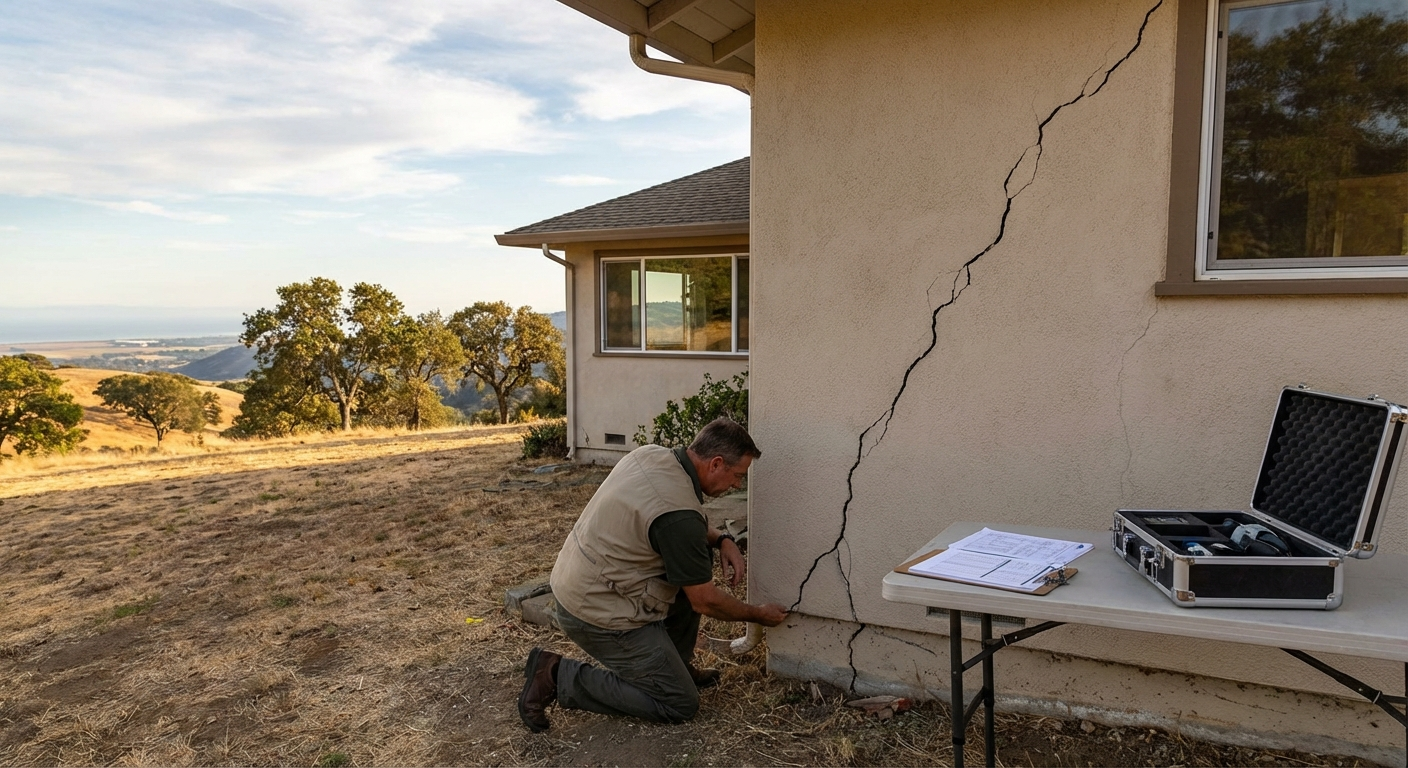
Most foundation damage isn’t a dramatic, sudden event. It’s a slow, insidious process. Small cracks appear. Doors and windows stick. Floors become uneven. This is often due to normal settling of the house over years, or the gradual expansion and contraction of the soil.
Your home insurance policy considers this “wear and tear” or “settling.” And guess what? It’s not covered. Think of it like this: your car insurance doesn’t pay for new tires when they wear out, or for a new engine when it finally gives up the ghost after 200,000 miles. It’s the same idea. Insurers expect you to maintain your home and address these issues as they arise.
Which brings up something most people miss: proper home maintenance can actually help prevent some foundation issues. Keeping your gutters clean, ensuring proper drainage away from your foundation, and even landscaping choices can make a difference. If water pools around your foundation, it can lead to problems that might have been avoided.
When Water Damage Plays a Role
Okay, so we’ve established that gradual earth movement isn’t covered. But what if water is involved? This is where it gets a little more nuanced.
If a sudden event, like a pipe bursting under your concrete slab, causes water to erode the soil and damage your foundation, that *might* be covered. The key word is “sudden.” If the pipe has been leaking for months, slowly causing damage, that might be considered a maintenance issue and could be denied. Insurers want to see immediate action on your part to mitigate damage.
That’s not the whole story. Sometimes, heavy rains cause localized flooding that leads to foundation issues. If it’s a sudden event, like a flash flood that overwhelms your property and compromises the foundation, your policy *might* respond under specific flood coverage – if you have it. Most standard home policies don’t cover flood damage, which is typically purchased separately through the National Flood Insurance Program (NFIP) or a private insurer. This is especially important for homes in low-lying areas or near rivers, even in places you wouldn’t typically think of as flood zones.
The Importance of Reading Your Policy
Honestly, the best advice anyone can give you is to actually read your insurance policy. Yes, it’s dense. It’s full of jargon. But those pages outline exactly what’s covered and, more importantly, what’s excluded. Look for sections on “earth movement,” “settling,” “water damage,” and “exclusions.”
If you’re not sure what something means, ask your agent. Someone like Karl Susman at Los Angeles Home Protection can walk you through the specifics. He’s seen it all, from minor cracks to major structural repairs across California. His team, with CA License #OB75129, is there to help demystify these things. Don’t be shy about calling them at (877) 411-5200 with your questions.
Understanding your policy *before* you have a problem is much better than trying to figure it out when you’re staring at a sagging floor.
What to Do If You Suspect Foundation Damage
First, don’t panic. But don’t ignore it either. Get a professional opinion. Contact a structural engineer or a foundation repair specialist. They can assess the extent of the damage, determine the cause, and give you an estimate for repairs. This initial assessment is invaluable.
If the engineer determines the damage was caused by a sudden, covered peril – like a specific event that fits your policy’s definition – then it’s time to contact your insurance company. Be prepared to provide documentation, photos, and the engineer’s report.
But here’s the reality for most: if the damage is due to long-term settling, soil expansion/contraction, or a lack of maintenance, your policy likely won’t cover it. You’ll be looking at out-of-pocket expenses. Foundation repair costs can range wildly, from a few thousand dollars for minor crack injections to tens or even hundreds of thousands for major underpinning or complete foundation replacement.
Preventative Measures and Future-Proofing
Can you really “future-proof” your foundation? Not entirely, but you can certainly reduce the risks.
* **Good Drainage:** Ensure rainwater drains *away* from your home. This means proper grading, effective gutters, and downspouts that extend several feet from the foundation.
* **Landscaping:** Be careful with large trees and shrubs too close to your foundation. Their roots can absorb moisture from the soil, causing it to shrink, or they can directly impact the foundation.
* **Regular Inspections:** Consider having a professional inspect your foundation every few years, especially if you live in an older home or an area with known soil issues.
* **Moisture Control:** In crawl spaces, ensure good ventilation to prevent moisture buildup.
Look, premiums have jumped 40% between 2022 and 2024 for many homeowners in California. Insurers like State Farm and Farmers have pulled back from some markets. It’s a tough time to be a homeowner, and it’s a tough time to be an insurance agent, too. That’s why working with someone who truly understands the California market is so important.
If you’re wondering about your specific policy, or if you’re looking to get a quote that actually makes sense for your home and its foundation, don’t hesitate.
Considering Your Options
What if you’re in an area with high risk, or you have an older home? You might find fewer options for traditional home insurance. This is where the California FAIR Plan comes into play. It’s an “insurer of last resort” that provides basic fire coverage for properties that can’t get insurance in the voluntary market. But FAIR Plan policies are usually very bare-bones and don’t offer the same level of protection as a standard policy – and they certainly won’t cover foundation issues from settling. You’d need to “wrap” a FAIR Plan policy with a Difference in Conditions (DIC) policy from a private insurer to get broader coverage, but even then, foundation issues are often tricky.
It’s a complex puzzle, and it’s easy to feel overwhelmed. But you don’t have to figure it out alone.
Let us help you find the right coverage.
Frequently Asked Questions About Foundation Damage and Insurance
Does homeowners insurance cover foundation repair in California?
Generally, no, not for issues like normal settling, earth movement (including earthquakes, landslides, or gradual soil expansion/contraction), or wear and tear. It typically only covers foundation damage if it results from a sudden, accidental peril explicitly covered by your policy, like a fire or a sudden burst pipe.
What kind of damage does a standard California homeowners policy typically exclude?
Most standard policies exclude damage from earth movement (unless you have separate earthquake coverage), settling, cracking, shrinking, bulging, or expansion of the foundation over time. They also typically exclude damage from floods, which requires a separate flood insurance policy.
If I have earthquake insurance, will it cover all foundation damage?
No, earthquake insurance specifically covers damage caused by seismic activity. It won’t cover foundation problems from normal settling, soil expansion, or other non-earthquake related issues. Also, earthquake policies usually come with high deductibles, often 10-15% of your dwelling coverage.
What should I do if I find cracks in my foundation?
First, contact a structural engineer or a foundation repair specialist to assess the damage and determine its cause. Get a professional report. If their findings indicate the damage was caused by a sudden, covered peril, then you should contact your insurance agent, like Karl Susman at Los Angeles Home Protection, to discuss filing a claim.
Is there anything I can do to prevent foundation damage?
Absolutely. Good drainage around your home is essential – ensure gutters are clean and downspouts direct water far from the foundation. Be mindful of landscaping, avoiding large trees and shrubs too close to the house. Regular maintenance and professional inspections can also help catch minor issues before they become major problems.
This article is for informational purposes only and does not constitute financial advice.