
The Foundation of Your Home’s Protection
Owning a home in California is a huge accomplishment, a piece of the Golden State you can call your own. But that pride of ownership comes with a stack of paperwork and a big responsibility: protecting your investment. You’ve got to shield your home from the unexpected – and in California, the unexpected can be pretty dramatic. We’re talking about everything from a kitchen fire to a rogue tree limb, and yes, even the unique risks that come with living in a place like Ventura County or the Santa Monica Mountains.
So, what exactly does a standard homeowners insurance policy here in California actually cover? It’s not always as simple as “everything.” Most policies are built around several key types of coverage, each designed to protect a different aspect of your property and your finances.
Dwelling Coverage: Rebuilding Your Sanctuary
This is the core of your policy. Dwelling coverage protects the physical structure of your home – the walls, the roof, the foundation, built-in appliances, and anything else permanently attached to the house. If a covered event like a fire, windstorm, or vandalism damages your home, this is the part of your policy that helps pay to repair or rebuild it.
How much coverage do you need? It’s not about the market value of your home. It’s about the cost to rebuild it from the ground up, materials and labor included. Given the rising construction costs in places like the Inland Empire, it’s really important to have enough coverage here. You don’t want to be underinsured if a major disaster strikes.

Other Structures: Beyond the Main House
Most homes have more than just the main dwelling. Maybe you’ve got a detached garage, a shed out back, a fence around your yard, or a guesthouse. Other structures coverage handles these. It’s usually a percentage of your dwelling coverage – often around 10%. So, if your main dwelling is insured for $500,000, you might have $50,000 for that fancy new fence or your detached workshop.
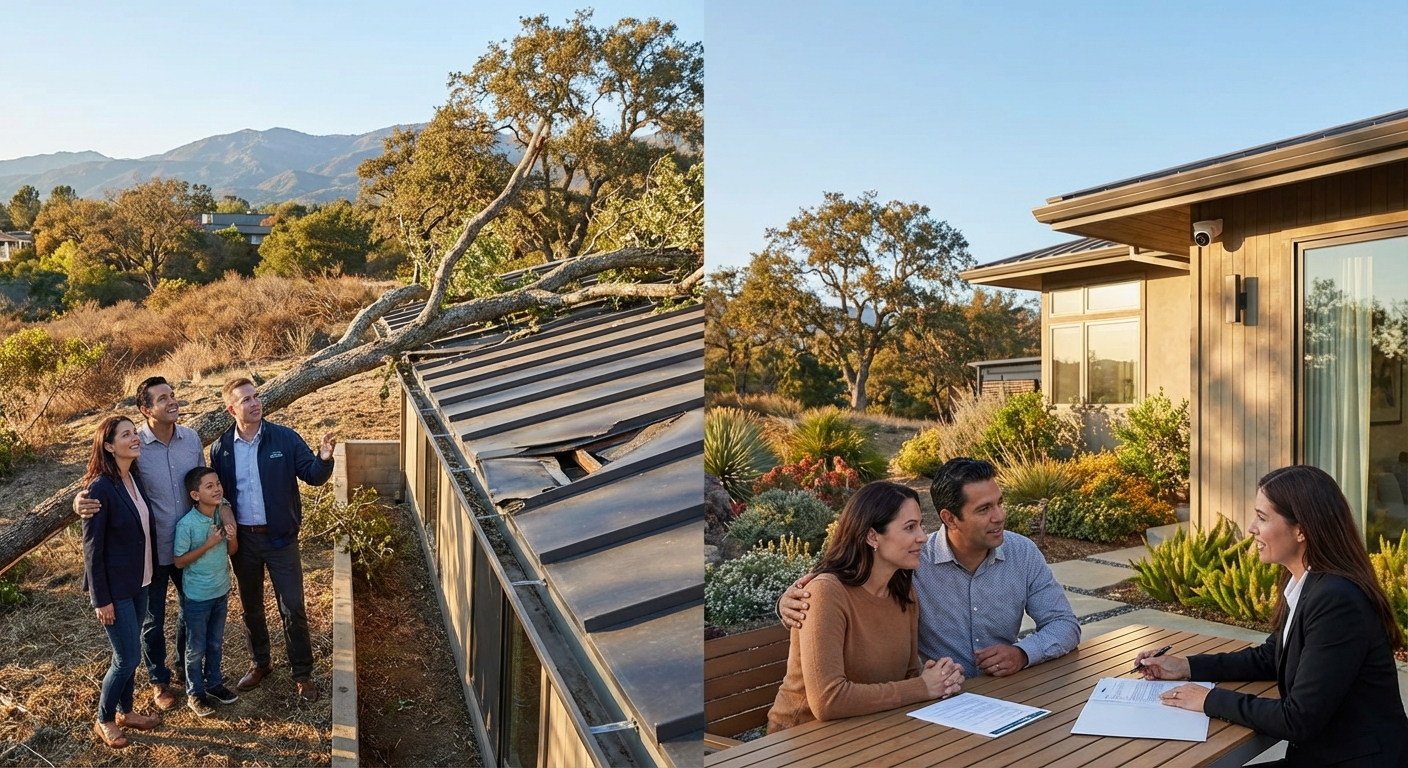
This coverage is generally for the same perils as your main dwelling. A tree falls on your shed? That’s what this is for.
Personal Property: Everything Inside Your Walls
Think about everything you own inside your home – furniture, clothes, electronics, jewelry, tools, dishes. That’s your personal property. This part of your policy helps you replace those items if they’re damaged or stolen due to a covered event. It even covers your belongings when they’re not at home, like your laptop stolen from a coffee shop in San Francisco.
Here’s where it gets interesting. You usually have two options for how your personal property is valued: Actual Cash Value (ACV) or Replacement Cost Value (RCV).
- Actual Cash Value (ACV): This pays you the depreciated value of your items. Your five-year-old TV might have cost $1,000 new, but its ACV could be just a few hundred dollars. It’s less money out of your pocket upfront, but you’ll get less back.
- Replacement Cost Value (RCV): This pays what it would cost to buy a brand-new version of the item today. That $1,000 TV? You’d get enough to buy a new one. Most people prefer RCV because it means you can actually replace what you lost without digging deep into your savings. It costs a bit more in premiums, but it’s usually worth it.
Loss of Use: When You Can’t Go Home
Imagine a fire makes your home uninhabitable. Where do you go? Loss of use coverage, also called Additional Living Expenses (ALE), steps in here. It pays for things like hotel stays, temporary rental housing, extra food costs, and even laundry if you can’t use your own facilities. It’s designed to cover the *additional* expenses you incur because you can’t live in your home.
This coverage is a lifesaver for many families displaced after a major event. It ensures you have a place to stay and can maintain some semblance of normalcy during a difficult time.
Liability: Protecting Your Wallet from Accidents
Accidents happen. Someone slips on your wet patio, your dog bites a visitor, or your child breaks a neighbor’s window with a baseball. Personal liability coverage protects you financially if you’re found responsible for injury to another person or damage to their property. It covers legal fees, medical bills, and settlement costs up to your policy limits.
Medical payments coverage is a smaller part of liability. It pays for minor medical bills for guests injured on your property, regardless of who was at fault. It’s usually a lower limit, maybe $1,000 to $5,000, and it’s meant to cover small incidents without needing to prove liability.
What Standard Policies *Don’t* Cover in California
Here’s the thing about California home insurance: what it *doesn’t* cover is often just as important as what it does. Many major risks specific to our state are typically excluded from a standard policy. This is where a lot of confusion, and sometimes heartbreak, happens.
Earthquakes: A Separate Shaker Policy
You live in California. You know about earthquakes. But your standard homeowners policy won’t pay for earthquake damage. Not a dime. If the Big One hits, you’re on your own unless you have a separate earthquake policy.
Most Californians who want earthquake coverage buy it through the California Earthquake Authority (CEA). It’s a state-run program. The deductibles can be pretty high – often 15% or 20% of your dwelling coverage – meaning you’ll pay a significant amount out of pocket before the coverage kicks in. But for many, it’s a necessary peace of mind.
Floods: Not Just for Rivers
Think about the atmospheric rivers that have slammed California recently. Or just heavy rains overwhelming storm drains. Standard homeowners insurance doesn’t cover flood damage. This includes damage from overflowing rivers, storm surges, or even just heavy rainfall that causes water to enter your home from the ground up.
To protect against floods, you need a separate flood insurance policy, usually purchased through the National Flood Insurance Program (NFIP). Even if you don’t live in a designated flood zone, flash floods can happen anywhere, especially in areas like the canyons of Los Angeles or along the Central Coast.
Mudslides and Landslides: Often Tricky
This is where it gets a little complicated. Mudslides and landslides are often linked to either floods or earth movement. If a mudslide is caused by flooding, it might be covered by a flood policy. If it’s caused by earth movement (like a hillside just giving way), it’s typically excluded, much like an earthquake. This is a huge concern in hilly, fire-scarred areas where the ground is unstable.
Some policies offer limited coverage for mudslides if they’re directly related to a covered peril like a wildfire removing vegetation. But generally, it’s a gray area that requires careful review.
Wildfires: The California Reality Check
California and wildfires go hand-in-hand. For years, standard policies covered fire damage. And they still do – in theory. But here’s the kicker: many major insurers, like State Farm and AAA, have stopped writing new homeowners policies in high-fire-risk areas, or even across the state for new customers. Farmers has pulled back too.
If you live in a brush fire zone – say, in the hills of Malibu, parts of Orange County, or even the wildland-urban interface of the Sierra Foothills – getting traditional coverage has become incredibly difficult, and expensive. Premiums jumped 40% between 2022 and 2024 for many homeowners. That’s a big difference.
Which brings up something most people miss. If you can’t get coverage from a standard insurer, you might end up with the California FAIR Plan. The FAIR Plan is the “insurer of last resort.” It provides basic fire coverage, but it’s often more expensive and offers less protection than a traditional policy. It usually won’t cover things like liability or theft, so you’d need to buy a “difference in conditions” (DIC) policy to fill those gaps.
Maintenance Issues: Wear and Tear
Your homeowners policy isn’t a home warranty. It won’t cover damage from lack of maintenance, wear and tear, or issues that develop over time. A leaky roof that you ignored for years? Not covered. A furnace that just stops working due to age? Not covered. These are your responsibility as a homeowner.
The California Insurance Market — A Shifting Landscape
Honestly, the California home insurance market feels like it’s in constant flux right now. The state faces unique challenges – wildfires, floods, earthquakes – and these have made insurers very, very wary.
Insurers are pulling back. They’re citing increased risks and the inability to raise rates quickly enough under Proposition 103, which gives the state’s Insurance Commissioner approval over rate increases. This means fewer options for homeowners, particularly in areas deemed high-risk for wildfires. The 2025 LA fires might be hypothetical, but the threat is real and constantly on insurers’ minds.
The FAIR Plan has seen a massive increase in policyholders. It’s a lifeline, but it’s not ideal. The state is trying to make changes to encourage insurers to return, allowing them to use forward-looking models for wildfire risk and speed up rate approvals. It’s a slow process, though.
Understanding Your Policy: Deductibles and Endorsements
Beyond the basic coverages, two other elements play a big role in your policy: deductibles and endorsements.
Deductibles: Your Share of the Cost
A deductible is the amount of money you pay out of pocket before your insurance company starts paying for a covered claim. If you have a $1,000 deductible and a $10,000 claim, you pay the first $1,000, and your insurer pays $9,000.
California policies sometimes have special deductibles. Wildfire deductibles, for instance, can be a percentage of your dwelling coverage – say, 5% or 10%. So, on a $500,000 home, a 5% wildfire deductible means you’d pay $25,000 before your insurance kicks in. That’s a big number. Flood and earthquake policies also have their own specific deductibles.
Endorsements: Adding Extra Protection
Endorsements are add-ons that customize your policy. They let you buy coverage for things not included in a standard policy or increase limits for specific items. Some common endorsements include:
- Scheduled Personal Property: For high-value items like expensive jewelry, art, or collectibles. A standard policy has limits on these, but an endorsement gives them specific, higher coverage.
- Water Backup and Sump Pump Overflow: This covers damage from water backing up through sewers or drains, or from a sump pump failure. Not usually in a standard policy.
- Service Line Coverage: Protects the underground utility lines (water, sewer, gas, electrical) that run from your property line to your house. If one breaks, this helps with repair costs.
Finding the Right Coverage in California
Navigating California’s home insurance market can be a real headache. With insurers pulling out, rates climbing, and unique risks, it’s not a “set it and forget it” kind of deal. This is why working with an experienced, independent insurance agent is so important.
An independent agent, like Karl Susman of Los Angeles Home Protection, doesn’t work for just one insurance company. They work with multiple carriers, including those still writing policies in California, and can help you compare options. They understand the nuances of the FAIR Plan, earthquake coverage, and what specific endorsements you might need for your home in, say, the Valley or the hills of San Diego County.
They can explain the fine print, help you understand your actual rebuild cost, and make sure you’re not caught off guard by exclusions or high deductibles. Don’t guess when it comes to protecting your most valuable asset.
Ready to see what coverage options are available for your California home? Don’t wait until it’s too late. Get a personalized quote today and protect your peace of mind. Click here to get your free home insurance quote!
Frequently Asked Questions About California Homeowners Insurance
Does homeowners insurance cover mold in California?
Usually, no. Standard policies typically exclude mold damage, especially if it’s due to long-term issues like a slow leak or poor maintenance. However, if the mold is a direct result of a sudden and accidental covered peril – like a burst pipe – some policies might offer limited coverage for remediation.
Is wildfire insurance included in a standard California homeowners policy?
Yes, fire damage is a standard peril covered by most policies. The challenge in California isn’t that fire *isn’t* covered, but that many insurers are no longer writing new policies in high-fire-risk areas, or are non-renewing existing ones. This forces many homeowners onto the FAIR Plan, which provides fire-only coverage and requires a separate policy for other perils.
What’s the difference between Actual Cash Value (ACV) and Replacement Cost Value (RCV) for personal property?
ACV pays you the depreciated value of your items, meaning you get less than what it would cost to buy them new. RCV pays what it costs to buy brand-new replacements for your damaged or stolen items. RCV offers more protection but usually costs a bit more in premiums.
Can I get homeowners insurance if I live in a high-fire-risk area in California?
It’s definitely harder than it used to be. Many traditional insurers have pulled back from these areas. You might need to explore options through the California FAIR Plan, potentially combined with a “difference in conditions” (DIC) policy to cover perils like liability and theft. An independent agent like Karl Susman (CA License #OB75129) can help you explore all available options.
Protecting your California home is more important than ever. Don’t leave it to chance. For expert advice and to explore your options, reach out to Karl Susman at Los Angeles Home Protection at (877) 411-5200. Or, start with a quick online quote:
Get a Home Insurance Quote for Your California Home Now!
This article is for informational purposes only and does not constitute financial advice.