
Myth #1: My Home Isn’t in a “Fire Zone,” So I’m Safe, Right?
Honestly, this is one of the biggest misunderstandings out there. Many people picture a “fire zone” as some clearly marked area on a map, maybe just where the trees start. You think, “My house is in the suburbs, miles from the nearest forest. I’m good.”
But here’s the thing: fire doesn’t read maps.
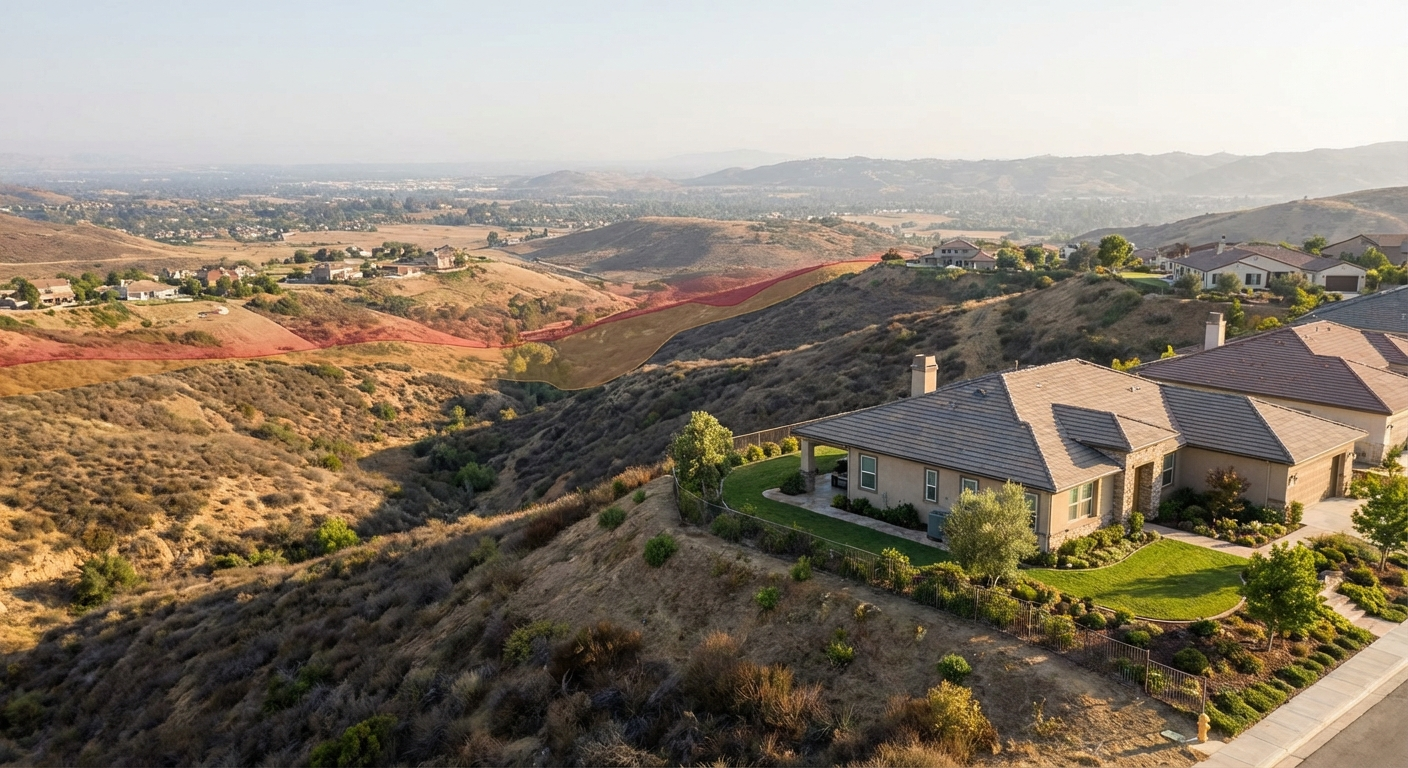
In California, especially, the lines between “urban” and “wildland” are blurry. We call it the Wildland Urban Interface, or WUI. It’s where homes are built right up against, or even within, natural vegetation. Think about those beautiful canyons in Ventura County, the sprawling homes near dry brush in the Inland Empire, or even subdivisions backing up to golden hills in the Valley. These aren’t just “fire zones” in the traditional sense; they’re *everywhere*.
A fire often doesn’t need to touch your house directly to destroy it. Embers, those tiny, glowing pieces of burning material, can travel for miles on a strong wind. They land on your roof, get sucked into your attic vents, or settle in a pile of leaves on your porch. That’s how many homes burn – from the inside out, or from a small ignition point far from the main blaze. It’s not always a wall of flame; sometimes, it’s just a tiny spark carried on the breeze.
Myth #2: My Old Insurance Company Will Always Cover Me.
For decades, many Californians had a pretty simple relationship with their home insurance. You picked a big name – State Farm, AAA, Farmers, Allstate – and they stuck with you. Year after year, the bill came, you paid it, and you felt protected.
That’s not the whole story anymore.
Between 2022 and 2024, California saw some major shifts. Premiums jumped, sometimes by 40% or more, for many homeowners. Insurers started pulling back, plain and simple. State Farm, for instance, announced it wouldn’t write new policies in the state. Other companies followed, quietly reducing their footprint or simply not renewing existing policies in areas they deemed too risky.
Why? It’s not personal. It’s math. Wildfires have caused billions of dollars in losses across California. The cost to rebuild homes has skyrocketed – labor, materials, permits, everything. Insurers look at their risk models, see the increasing frequency and intensity of fires, and decide they can’t afford to cover homes in certain areas without charging rates that the state Department of Insurance might not approve. So, they leave. Or they stop offering coverage.

So, What Happens When Insurers Pull Back?
If your traditional insurer sends you a non-renewal notice, you’re not suddenly without options. But it’s not always easy. Many homeowners find themselves turning to the California FAIR Plan. This isn’t a private insurance company; it’s the state’s “insurer of last resort.” It’s designed to make sure *everyone* can get basic fire coverage, even if no private company will offer it.
The FAIR Plan is a safety net. But it’s often a more expensive one, and it typically offers less comprehensive coverage. Think of it as a bare-bones policy. It’ll cover fire and a few related perils, but it won’t cover things like liability, theft, water damage, or personal property beyond a very basic level.
Which brings up something most people miss: if you get a FAIR Plan policy, you almost always need a second policy, called a “Difference in Conditions” (DIC) policy. This DIC policy fills in all those gaps – the liability, the theft, the water damage, the higher personal property limits. So now, you’re juggling two policies, two bills, and potentially a lot more headaches. It’s a hassle, frankly.
Myth #3: If I’m in a Fire Zone, My Rates Will Be Sky-High, and There’s Nothing I Can Do.
True, if you’re in a high-risk area, your rates will likely be higher than someone living in a low-risk suburban tract. That’s just how risk pricing works. But to say there’s “nothing you can do” isn’t accurate. In fact, there’s quite a bit.
You can actively reduce your home’s wildfire risk, and you should. This isn’t just about saving money on insurance; it’s about protecting your biggest asset and, more importantly, your family.
One major step is creating defensible space around your home. That means clearing away dry brush, dead leaves, and anything flammable for at least 100 feet. The first five feet directly around your house – the “ember-resistant zone” – is absolutely critical. No combustible materials here. No bark mulch. No wooden fences attached to the house.
Then there’s home hardening. This is about making your house itself more resistant to embers and flames. We’re talking about things like:
* Installing ember-resistant vents in your attic and crawl spaces.
* Upgrading to a Class A fire-rated roof.
* Using fire-resistant siding materials.
* Replacing single-pane windows with dual-pane, tempered glass.
* Enclosing eaves and soffits.
The state of California, through its Department of Insurance, is pushing insurers to actually *consider* these mitigation efforts when setting rates. The idea is that if you’ve invested in making your home safer, you should see a benefit. It’s a slow process, thanks to Proposition 103, which requires all rate changes to be approved by the state. But progress is being made. Discounts for home hardening and defensible space are becoming more common.
What About New Rules and Regulations?
California’s insurance commissioner has been working on a “Sustainable Insurance Strategy” to stabilize the market. Part of that involves allowing insurers to use forward-looking models (predicting future fire risk, not just past fires) and to account for the cost of reinsurance – what insurers pay to *their* insurers. In return, companies are expected to come back to California and offer more coverage. It’s a delicate dance, but the goal is to make the market healthier for everyone.
Myth #4: All Homeowners Insurance is Pretty Much the Same.
This couldn’t be further from the truth. Just like cars, there are different models and trims of home insurance policies. An HO-3 policy, the most common, offers broad coverage for your dwelling but “named perils” for personal property – meaning it only covers what’s specifically listed. An HO-5 policy, on the other hand, offers “open perils” coverage for both your dwelling and personal property, meaning it covers everything *unless* it’s specifically excluded. Big difference.
Beyond the basic policy type, there are a ton of nuances:
* Dwelling coverage: Is it enough to rebuild your home entirely, including current construction costs?
* Personal property: Do you have enough coverage for all your belongings? Is it actual cash value (depreciated) or replacement cost (new for old)?
* Loss of use: If a fire makes your home unlivable, how long will the policy pay for temporary housing, and how much?
* Specific exclusions: What *isn’t* covered? (Earthquakes and floods are almost always excluded and need separate policies.)
This is where an independent insurance agent truly shines. They don’t work for one company; they work for you. They can compare policies from multiple insurers, explain the subtle differences, and help you find the best fit for your specific needs and budget. They understand the quirks of the California market – the FAIR Plan, the DIC policies, the mitigation discounts.
Need an expert to help you cut through the noise? Karl Susman, with Los Angeles Home Protection, CA License #OB75129, has been helping California homeowners for years. You can reach his team at (877) 411-5200.
Ready to explore your options and get a clearer picture of your coverage? Get a Home Insurance Quote Today!
Myth #5: My House Burned Down. The Insurance Company Will Just Rebuild It.
This is a heartbreaking myth that too many people discover too late. Many homes in California are underinsured. The cost to rebuild a home today is significantly higher than it was even five or ten years ago. Construction costs have soared. Labor is expensive. Building materials are pricier. And then there are all the new building codes.
If your policy only covers the original construction cost, or an outdated estimate, you could be left with a huge gap. Imagine your policy says it’ll pay $500,000 to rebuild, but the actual cost is $750,000. That extra $250,000 comes straight out of your pocket.
You’ll want to check your policy for “extended replacement cost” or “guaranteed replacement cost” coverage. Extended replacement cost adds a percentage (like 20% or 50%) *above* your dwelling coverage limit, helping account for unexpected cost spikes. Guaranteed replacement cost is even better, theoretically paying whatever it takes to rebuild, though these are rare now.
But wait — there’s another hidden cost: building code upgrades. After a major fire, local municipalities often update their building codes. So, when you rebuild, you might be required to install sprinklers, use different materials, or make other costly upgrades that weren’t part of your original home. Your standard policy won’t automatically cover these “ordinance or law” changes unless you have specific coverage for it.
The Cost of Doing Business in California.
It’s not just the fires themselves. It’s the entire ecosystem of rebuilding. In places like Malibu or the foothills of the Sierra Nevada, property values are high, and the expectation for quality construction is equally high. Permitting can be a nightmare. Finding qualified contractors after a widespread disaster is tough, driving up prices even further. This isn’t just about replacing what you had; it’s about navigating a complex, expensive process to get back home.
That’s why reviewing your policy annually with an expert is so important. Make sure your dwelling coverage reflects current rebuilding costs, not just market value.
Finding Your Path Forward.
Yes, finding homeowners insurance in California’s fire zones can feel like a daunting task. The market’s tight, the rules are changing, and the risks are real. But it’s not a hopeless situation. By understanding the realities, taking proactive steps to harden your home, and working with knowledgeable professionals, you can find the coverage you need. Don’t just settle for the first quote or assume your existing policy is enough. Be an informed homeowner.
Ready to explore your options? Click here for a personalized quote.
Frequently Asked Questions
What exactly is the Wildland Urban Interface (WUI)?
The WUI is where homes and other human developments meet or intermingle with undeveloped wildland vegetation. It’s not a fixed boundary but a zone where wildfire can readily transfer between wildland fuels and homes, often through embers carried by wind. Many California communities, even seemingly suburban ones, are part of the WUI.
Can I really get a discount for home hardening?
Yes, increasingly so. The California Department of Insurance is pushing insurers to offer discounts for homes that have implemented wildfire mitigation measures, such as ember-resistant vents, fire-rated roofs, defensible space, and other hardening techniques. Not all insurers offer them yet, but it’s becoming more common, and it’s definitely worth asking about.
What if my current insurer drops me?
If your private insurer decides not to renew your policy, your primary option is often the California FAIR Plan. This plan provides basic fire coverage as an “insurer of last resort.” However, it typically doesn’t cover things like liability, theft, or water damage, so you’ll usually need to purchase a separate “Difference in Conditions” (DIC) policy to fill those gaps and get comprehensive protection.
How often should I review my policy?
You should review your homeowners insurance policy at least once a year, ideally with an independent agent. This ensures your coverage limits, especially your dwelling coverage, keep pace with rising construction costs and any home improvements you’ve made. It also lets you discuss any new discounts for home hardening or changes in the insurance market that might affect your options.
What’s a DIC policy?
A “Difference in Conditions” (DIC) policy is a supplemental insurance policy that you purchase in conjunction with a California FAIR Plan policy. Since the FAIR Plan only covers basic fire perils, the DIC policy provides coverage for other common risks like theft, liability, water damage, and additional living expenses, essentially bringing your coverage up to a standard homeowners policy level.
This article is for informational purposes only and does not constitute financial advice.