California Home Insurance: Understanding the Shifting Sands of Law and Ordinance
For anyone owning a home in California, the topic of insurance has become a daily conversation. It’s not just about protecting your biggest asset anymore; it’s about finding that protection in the first place. You see the headlines. You hear about neighbors getting dropped. What’s driving all this? Often, it comes down to a complex web of state laws, local ordinances, and the very real risks California faces.
The California Insurance Quagmire: A Look at Prop 103
Honestly, understanding California’s insurance situation starts with a deep breath and a look back at Proposition 103. Passed by voters way back in 1988, this law was groundbreaking. It essentially said insurance companies couldn’t just raise rates whenever they felt like it. Instead, they had to get approval from the state’s Insurance Commissioner before making any changes. It also made the Commissioner an elected official, giving consumers a direct voice.
The idea was to keep rates fair and prevent insurers from price gouging. For decades, it largely worked. Premiums stayed relatively stable compared to other states.
But here’s the thing. Thirty-plus years is a long time. California’s risks have changed dramatically since ’88. Think about it: massive wildfires, intense atmospheric rivers, rising construction costs. The old models insurers used to predict risk and set rates under Prop 103 don’t quite fit the current reality. They’re looking in the rearview mirror, using past data to predict future losses. When the future looks very different from the past, that system starts to crack.

Why Insurers Are Pushing Back (or Pulling Out)
You’ve probably heard the news. Major players like State Farm, Farmers, and AAA have either stopped writing new policies in California or significantly restricted what they’ll cover. Why? They argue that under Prop 103, the rates they’re allowed to charge don’t cover their actual risk and the cost of paying out claims.
Imagine running a business where the price you can charge for your product is capped, but the cost of making that product keeps skyrocketing. Eventually, you can’t afford to stay in business. That’s the argument many insurers are making. They say they’re losing money in California.
This isn’t just about big corporations being greedy. It’s about solvency. If an insurance company can’t make enough money to pay claims, they fail. And when an insurer fails, it leaves policyholders in a terrible spot. So, they’re making business decisions to protect themselves.
Which brings up something most people miss. When insurers pull back, it doesn’t just affect new homeowners. Existing policyholders often face non-renewals, forcing them into a scramble to find new coverage. It’s a tough spot for many families, from the coast of Ventura County to the arid stretches of the Inland Empire.
The FAIR Plan: California’s Last Resort, But Not a Perfect Solution
When traditional insurers won’t cover you, California has the FAIR Plan. This isn’t a private company; it’s a state-mandated program designed to be the “insurer of last resort.” If you can’t get coverage anywhere else, the FAIR Plan is supposed to step in.
Many homeowners, especially those in high-fire-risk areas like parts of the Sierra Nevada foothills or the Santa Monica Mountains, are finding themselves on the FAIR Plan. Its purpose is good, but it has limitations.
For one, FAIR Plan coverage is often more expensive than a standard policy. And often, it only covers fire damage – leaving you to find a “wrap-around” policy for liability, theft, and other perils. That means two policies, two bills, and more complexity.
The sheer volume of new FAIR Plan policies is also a concern. Its capacity is being tested like never before. The more people it covers, the more strain it puts on the system, which eventually trickles down to everyone through assessments.
Wildfire Risk and Local Ordinances: What You Must Do
California’s wildfire problem is, without question, the biggest driver of insurance woes. The scale and intensity of fires have grown exponentially. This isn’t just a natural disaster; it’s a policy challenge.
Many state laws and local ordinances now directly address wildfire prevention, and they absolutely impact your insurance.
Home Hardening and Defensible Space
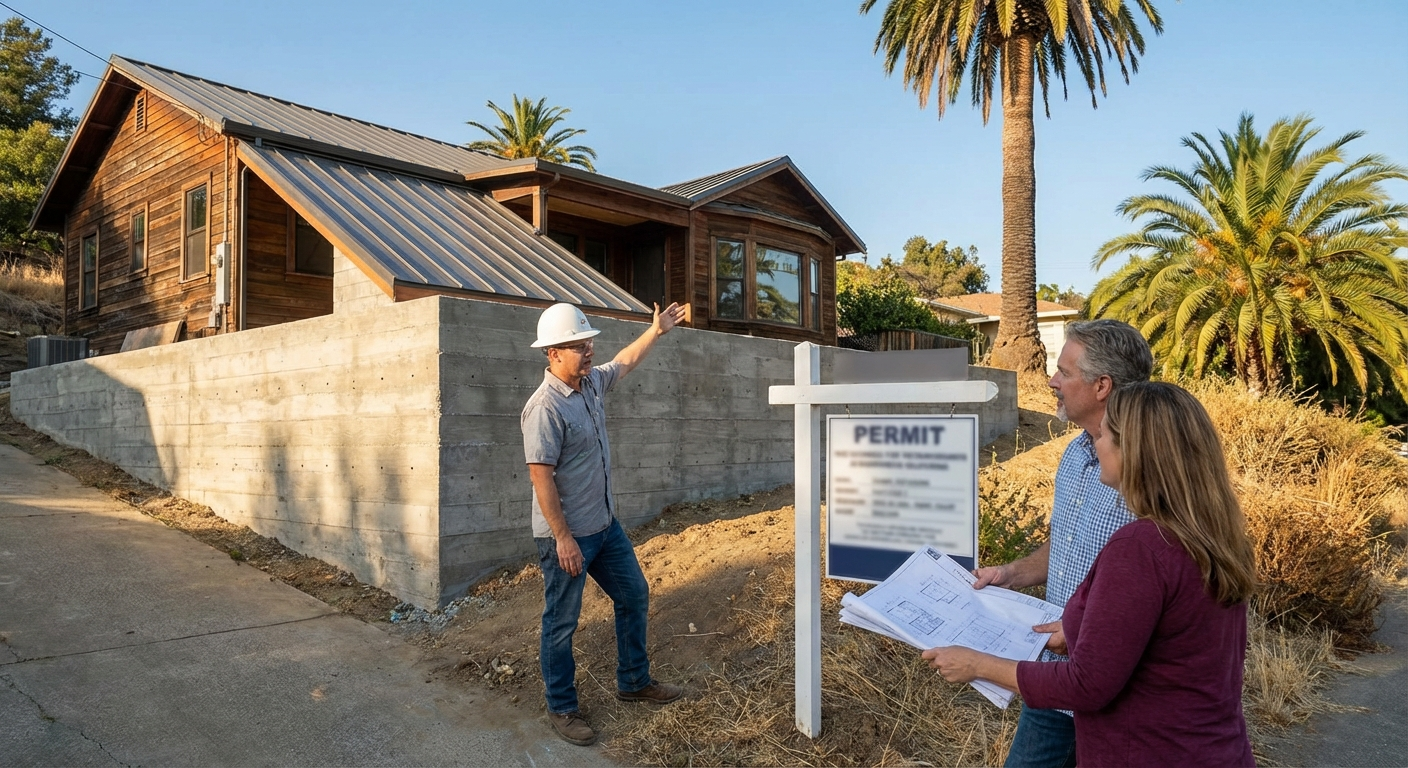
This is huge. State law, specifically Public Resources Code 4291, mandates “defensible space” around homes in high-fire-risk areas. That means clearing brush, trimming trees, and removing flammable materials within 100 feet of your house. Local fire departments often enforce these rules, and they’re not suggestions.
Beyond that, “home hardening” measures are gaining traction. This means making your actual house more resistant to embers and flames. Think about things like:
* Fire-resistant roofing: Replacing old wood shake roofs with Class A materials.
* Vented eaves: Sealing up open eaves or installing fire-resistant vents.
* Dual-pane windows: Especially those that resist radiant heat.
* Non-combustible siding: Replacing wood siding with stucco or fiber cement.
* Enclosed decks: Removing potential fuel sources underneath.
Some local governments, particularly in areas like Sonoma County or the hills above Los Angeles, have even stricter building codes for new construction or major remodels in the wildland-urban interface (WUI). These aren’t just good ideas; they’re often mandatory.
But wait — here’s where it gets interesting. The California Department of Insurance (CDI) is pushing insurers to offer discounts for homeowners who implement these hardening measures. The idea is that if you reduce your risk, you should be rewarded with a lower premium. This is a direct response to the wildfire crisis, trying to create a market incentive for safety. It’s a work in progress, but it’s a major regulatory push.
The Department of Insurance’s Big Plans: New Regulations on the Horizon
California Insurance Commissioner Ricardo Lara is trying to fix this mess. He’s proposed a series of regulatory changes aimed at stabilizing the market. These aren’t just minor tweaks; they’re potentially game-changing.
One of the biggest proposals involves allowing insurers to use “forward-looking” catastrophe models when setting rates. This means they could use predictive models that account for future climate change and wildfire risk, rather than just historical data. It’s a significant departure from the strict interpretation of Prop 103 that has been in place for decades.
Another proposed change would allow insurers to account for reinsurance costs – basically, the insurance that insurance companies buy for themselves. These costs have soared, and insurers argue they need to factor them into their rates.
The goal? To entice insurers back into the California market, increase competition, and ultimately give homeowners more options and potentially more stable rates. It’s a delicate balance: protecting consumers from excessive rate hikes while ensuring insurers can actually afford to do business here. The short answer is yes, these changes are needed. The real answer is more complicated, because any rate increase is tough for homeowners.
What California Homeowners Can Do Right Now
This all sounds pretty bleak, doesn’t it? But you’re not powerless.
First, understand your current policy. What does it cover? What are the limits? Are you adequately insured for rebuilding costs, which have jumped 30-50% in many areas recently?
Next, take those home hardening and defensible space measures seriously. Not only do they protect your home and family, but they could also make you more attractive to insurers and potentially qualify you for discounts. Get an inspection from your local fire department or a qualified expert.
Most importantly, don’t go it alone. The California insurance market is incredibly complex right now. This is where an independent insurance agent becomes absolutely invaluable. They work with multiple carriers, not just one, and they understand the nuances of the market. They can help you shop around, explain your options, and find the best coverage available for your specific situation.
Someone like Karl Susman at Los Angeles Home Protection, CA License #OB75129, has been in this business for years. He’s seen these shifts firsthand and knows how to help homeowners navigate them. A good agent can often find policies you didn’t even know existed or help you combine coverage to fill gaps.
If you’re facing a non-renewal or struggling to find coverage, don’t wait until the last minute. Start looking several months before your current policy expires.
Ready to explore your options and get some straight answers about your home insurance? You can start by getting a quote today: https://susmaninsurance.com/get-a-quote/
FAQ: Your California Home Insurance Questions Answered
Q: What is Prop 103, and how does it affect my insurance rates?
Prop 103 is a California law from 1988 that requires insurance companies to get approval from the elected Insurance Commissioner before raising rates. It was designed to keep rates fair, but many insurers now argue it prevents them from charging enough to cover current risks, especially from wildfires.
Q: My insurer just non-renewed my policy. What are my options?
First, don’t panic. Contact an independent insurance agent, like Karl Susman at Los Angeles Home Protection (CA License #OB75129). They can shop multiple carriers for you. If private insurance isn’t available, the California FAIR Plan is an option, though it might only cover fire and require a separate “wrap-around” policy for other perils.
Q: What is “home hardening,” and will it lower my premiums?
Home hardening means making your house more resistant to fire, often by using fire-resistant materials for roofs, vents, and siding, and by maintaining defensible space around your property. The California Department of Insurance is pushing for insurers to offer discounts for these measures, so it’s definitely worth doing, both for safety and potential savings.
Q: Are there any new laws coming that will change the insurance market?
Yes, the California Department of Insurance is working on new regulations. These proposals aim to allow insurers to use forward-looking catastrophe models and account for reinsurance costs when setting rates. The goal is to encourage insurers to return to the California market and increase coverage options for homeowners.
Q: Why is it so hard to get insurance in high-fire-risk areas like parts of Sonoma County or the Malibu Hills?
Insurers are pulling back from these areas because the risk of catastrophic wildfire is extremely high, and they feel the rates they’re allowed to charge under Prop 103 don’t adequately cover that risk. This forces many homeowners into the FAIR Plan, which is designed for areas where private insurance is unavailable.
If you have more questions or need personalized guidance, reach out to Karl Susman and his team. They’re here to help California homeowners find the right coverage. Get a quote today: https://susmaninsurance.com/get-a-quote/
This article is for informational purposes only and does not constitute financial advice.