
What’s Hiding Under Your California Home?
You probably spend a lot of time thinking about your home. The roof. The kitchen. Maybe even that leaky faucet. But what about everything *under* your home? We’re talking about the network of pipes and wires that bring essential services right to your doorstep. Your water line. The sewer pipe. Gas lines, electrical cables, even your internet and cable TV connections. These aren’t just buried; they’re the lifeblood of your property.
For most California homeowners, these service lines are completely out of sight, out of mind. Until they’re not. Until something goes wrong, and suddenly you’re faced with a big, expensive problem that traditional home insurance might not touch. That’s a nasty surprise nobody wants.
The Costly Reality of Service Line Breaks
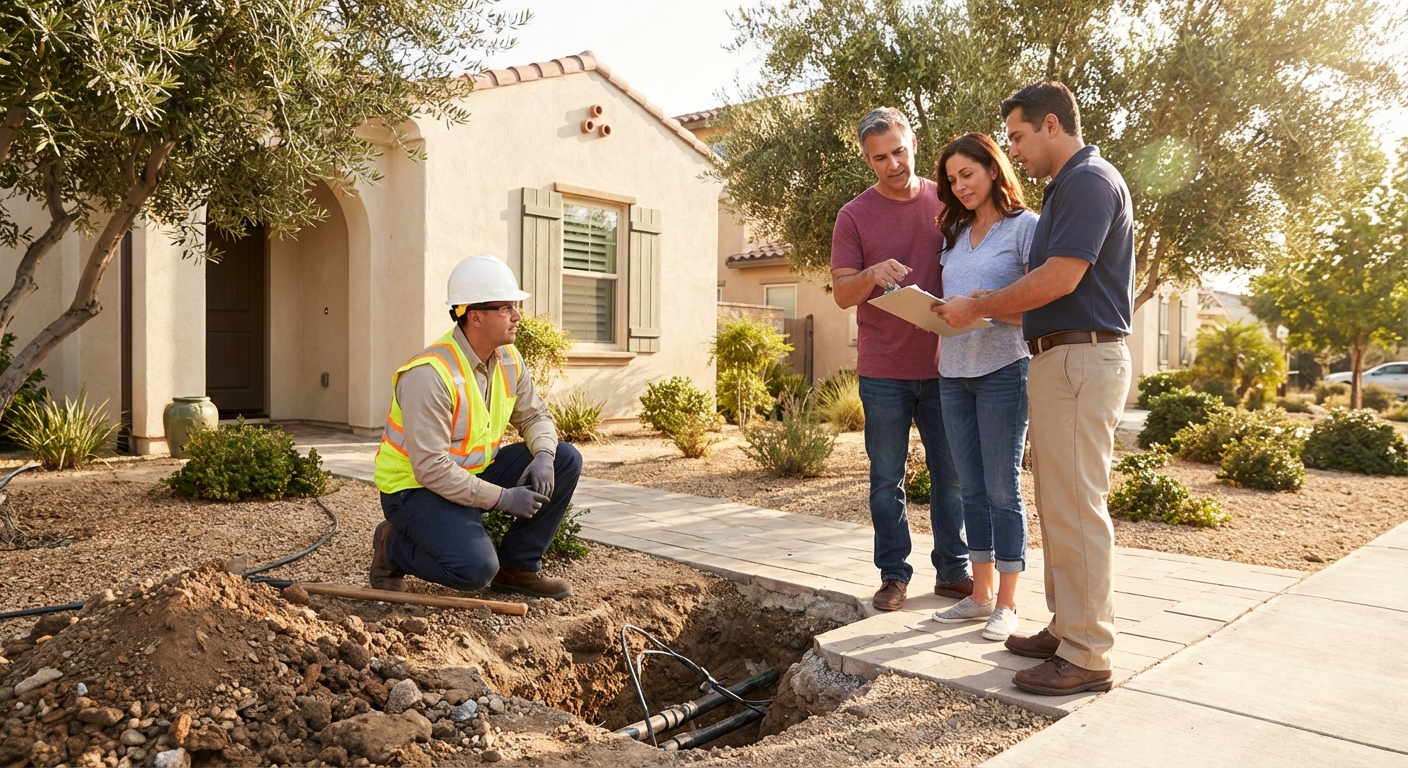
Think about it. Your home’s service lines run from the street, across your yard, and into your house. They’re underground, exposed to all sorts of hazards. Tree roots are probably the biggest culprits, especially in established neighborhoods with mature trees — places like Pasadena, Berkeley, or even the older parts of the Inland Empire. Those roots seek out moisture, finding tiny cracks in your water or sewer lines and then growing, expanding, and eventually crushing the pipe.
But roots aren’t the only problem. Older pipes, especially those made of clay or cast iron, simply degrade over time. Ground shifting, even from minor tremors common across California, can cause pipes to crack or separate. Heavy vehicle traffic on the street can put pressure on lines. A sudden cold snap, rare but not unheard of in the Valley, can freeze and burst water pipes.
When one of these lines breaks, it’s not just a minor inconvenience. It’s a major disruption. You might lose water pressure, have sewage backing up, or even face a gas leak. The repair isn’t simple. Someone has to dig. And dig deep. That means tearing up your lawn, driveway, or even part of your landscaping. The average cost for a single service line repair? Easily thousands of dollars. Sometimes tens of thousands, depending on the line’s depth and location. Your standard homeowner’s policy, the one protecting your house from fire or theft, usually won’t cover these underground repairs. That’s a big difference.

Service Line Coverage: Your Underground Safety Net
Here’s where it gets interesting. Service line coverage is an optional add-on to your standard homeowner’s insurance policy. It’s designed specifically to cover the cost of repairing or replacing those essential utility lines that run from the street to your house. This isn’t just about the pipe itself; it’s about the entire process.
This coverage steps in when a covered service line fails due to things like corrosion, cracking, leaking, or even damage from tree roots. It helps pay for the excavation needed to get to the line, the actual repair or replacement of the pipe or wire, and often, the cost to restore your yard or driveway afterward. Think of it as an underground safety net, protecting your wallet from those unexpected digging projects.
Why California Homeowners Need This Add-On
California’s unique environment makes service line coverage particularly smart for many homeowners. We’ve got a lot of older homes, especially in cities like San Francisco, Los Angeles, and Sacramento. Older homes mean older infrastructure – pipes that are past their prime and more susceptible to damage.
Then there’s our geology. California sits on active fault lines. While major earthquakes are rare, minor tremors happen all the time. Even small shifts in the ground can stress underground pipes and wires. Droughts, followed by heavy rains, can also cause the soil to expand and contract, putting pressure on buried lines. And let’s not forget those beautiful, mature trees that shade so many California streets. They might be lovely, but their roots are relentless. They’ll find any weakness in your sewer or water lines, guaranteed.
Honestly, if you live in a home built before 1980, or if you have large trees near your service lines, this coverage isn’t just a good idea. It’s almost a necessity. The cost of a single repair could easily dwarf years of premiums for this add-on.
What Service Line Coverage Actually Covers (and What It Doesn’t)
Most service line policies are pretty clear about what they include. You’re typically covered for the cost of repairing or replacing damaged service lines. This includes the water pipe, sewer line, gas line, power lines, and sometimes even internet, cable, or geothermal lines.
But wait — it’s not just the pipe itself. The coverage usually extends to the excavation costs required to access the line. That’s a big deal, as digging can be a huge chunk of the total bill. It also often covers the cost of repairing or replacing damaged outdoor property, like your driveway, sidewalk, or landscaping, that had to be torn up for the repair. Some policies might even include additional living expenses if the damage makes your home uninhabitable for a short period, or expediting expenses if you need to pay extra to speed up the repair.
What’s usually *not* covered? Lines that are already inside your home’s foundation or within the walls. This coverage is for the lines *outside* your home, leading from the property line to the house. It also generally won’t cover lines owned by the city or utility company, or damage that existed before you bought the policy. Intentional damage or damage from neglect usually isn’t included either. Always check your specific policy details.
Reading the Fine Print: Limits and Deductibles
Like most insurance, service line coverage comes with limits and deductibles. The coverage limit is the maximum amount your policy will pay out for a single incident. This often ranges from $10,000 to $20,000, though some insurers offer higher limits. For most homeowners, a $10,000 or $15,000 limit is usually enough to cover a typical repair, but if you have very long service lines or live in an area with high labor costs, you might want to consider a higher limit.
You’ll also have a deductible, just like with your regular home insurance. This is the amount you pay out of pocket before your insurance kicks in. Service line deductibles are often lower than standard home insurance deductibles — sometimes as low as $250 or $500. It’s a small price to pay when you’re looking at a $7,000 repair bill.
Is It Worth the Extra Premium? A California Perspective.
The short answer is yes. The real answer is more complicated, but for most California homeowners, it’s a smart purchase. The annual premium for service line coverage is usually quite low — often less than $100 a year. Compare that to the potential cost of a repair, which, as we’ve discussed, can easily run into the thousands. It’s a classic case of paying a little to protect yourself from a potentially huge, unexpected expense.
Consider the current state of home insurance in California. Premiums have jumped significantly in recent years, with some areas seeing increases of 30-50% between 2022 and 2024. Insurers like State Farm and Farmers have pulled back from writing new policies in certain high-risk areas. Every dollar counts. But sometimes, spending a little more on a targeted add-on can save you a lot more down the road. It provides genuine peace of mind, knowing you won’t be blindsided by a massive bill if your sewer line collapses. It’s often a no-brainer, especially for older homes.
How to Get Service Line Coverage in California
Getting this coverage is usually pretty straightforward. You’ll need to talk to your home insurance agent. Not all insurers offer it, or they might have different terms and conditions. Some might include it automatically with certain policies, while others offer it as an optional endorsement you can add for a small fee.
Finding the right coverage for your California home, especially with the market as it is today, requires a knowledgeable expert. Someone who understands the nuances of Prop 103, the FAIR Plan changes, and the specific risks in areas from Ventura County to the Sierra foothills. Karl Susman, with Los Angeles Home Protection, CA License #0B75129, has been helping California homeowners for years. He can explain your options and help you find the right policy. You can reach him at (877) 411-5200.
If you’re curious about how service line coverage fits into your overall home protection strategy, it’s time for a conversation. Get a personalized quote for your California home insurance.
Click here to get a personalized quote for your California home insurance.
The Broader California Insurance Picture
The insurance market in California is certainly challenging right now. Wildfires, mudslides, and other natural disasters have led to non-renewals and higher premiums across the state. This makes every piece of your home insurance policy more important than ever. You can’t afford gaps in coverage, especially for something as fundamental as your home’s service lines.
A good insurance agent doesn’t just sell you a policy. They help you understand your risks and explain how different coverages protect you. They cut through the noise and help you make informed decisions, ensuring you’re not underinsured for those unexpected events. Service line coverage might seem like a small detail, but it’s one of those protections that can save you from a major financial headache. Don’t leave your underground infrastructure to chance.
Ready to explore your options and protect your home from the ground up? Get a personalized quote for your California home insurance today.
FAQ About Service Line Coverage
What exactly is a “service line” in terms of insurance?
A service line is an underground pipe or wire that brings essential services from the public utility main to your home. This typically includes lines for water, sewer, natural gas, electricity, and sometimes even communication lines like cable or internet.
Does my standard California home insurance policy already include service line coverage?
Almost always, no. Standard homeowner’s policies are designed to cover damage to the structure of your home and your personal belongings from specified perils. Service line coverage is an optional add-on or endorsement that you typically have to purchase separately.
What are the most common causes of service line damage in California?
In California, common causes include tree root intrusion, especially in older, tree-lined neighborhoods; aging pipes made of materials like clay or cast iron; ground shifting due to seismic activity or soil expansion/contraction from droughts and heavy rains; and even accidental digging by homeowners or contractors.
How much does service line coverage usually cost in California?
The cost varies by insurer and the specific limits you choose, but it’s generally quite affordable. Many homeowners find they can add service line coverage to their policy for less than $100 per year.
If my service line breaks, will the city or utility company pay for the repair?
Not usually. The utility company is typically responsible for the lines up to your property line. From your property line to your house, those lines are generally considered your responsibility as the homeowner. This is precisely why service line coverage is so important.
This article is for informational purposes only and does not constitute financial advice.