
That Sinking Feeling: Does Your California Homeowner’s Policy Cover Sinkholes?
The ground beneath your home feels solid, doesn’t it? Most days, we don’t give it a second thought. But then you hear a story, or maybe you see a news report about a sudden void opening up, swallowing cars, or even parts of a house. The thought alone can make your stomach drop. For California homeowners, already facing a dizzying array of natural disaster risks from wildfires to earthquakes, the idea of a sinkhole adds another layer of anxiety. You probably wonder: if my house suddenly started to sink, would my insurance actually cover it?
It’s a perfectly reasonable question. And honestly, the answer isn’t a simple yes or no. It’s far more complicated, wrapped up in insurance jargon and geological quirks that most of us never want to think about until it’s too late.
What Exactly *Is* a Sinkhole, Anyway?
Let’s start with the basics. A true sinkhole forms when there’s an empty space, or a “void,” underground. This often happens in areas where the bedrock is made of soluble materials like limestone, gypsum, or dolomite. Over time, groundwater seeps through cracks and dissolves these rocks, creating caves or caverns. When the roof of one of these underground spaces can no longer support the weight of the soil and structures above it, it collapses. Suddenly. Dramatically.
You might think of Florida, famous for its sinkholes. California isn’t quite the same geological playground for them. We don’t have vast, continuous stretches of limestone bedrock that dissolve easily. But that doesn’t mean we’re immune. Parts of California, particularly in the Central Valley, Santa Clara Valley, and some areas of the Inland Empire, have specific soil types – like expansive clays – and sometimes, underground water conditions that can lead to similar ground instability. These might not be “true” geological sinkholes, but to a homeowner watching their foundation crack, the effect feels pretty much the same.

The Big Question: Is It Covered by My Standard Policy?
For most California homeowners, your policy is likely an HO-3, the most common type. This policy provides “open perils” coverage for your dwelling, meaning it covers everything unless it’s specifically excluded. And here’s where the trouble starts.
Almost every standard homeowners insurance policy in California, whether from State Farm, AAA, Farmers, or any other major insurer, contains what’s called an “earth movement” exclusion. This exclusion is broad. It typically says your policy won’t pay for damage caused by:
* Earthquakes
* Landslides
* Mudslides
* Subsidence
* And yes, sinkholes
That’s a tough pill to swallow. It means that if a pure, natural sinkhole opens up under your Ventura County home and causes structural damage, your standard policy probably won’t pay a dime.
But Wait — There Are Nuances (And Sometimes, Hope)
Now, that’s not the whole story. The “earth movement” exclusion is pretty sweeping, but insurance policies are full of tiny print that sometimes offers a glimmer of possibility. Here’s where it gets interesting.
Some policies *do* make exceptions for certain types of earth movement. For instance, if the ground collapse is sudden and caused by the accidental discharge or overflow of water *on* your property – say, a burst pipe under your slab that washes away supporting soil and creates a void – that might be covered. Why? Because the *proximate cause* of the damage wasn’t natural earth movement, but rather a sudden, accidental plumbing event. That’s a big difference.
Another rare exception might involve damage from underground mining operations, if those exist in your specific area and directly cause a collapse. But for most folks in, say, the San Fernando Valley, that’s not exactly a common concern.
The key is often how the sinkhole forms. Was it a slow, natural geological process? Excluded. Was it sudden, caused by something like a busted water main or septic tank that eroded the soil? Potentially covered. These distinctions are often fought over by adjusters and homeowners, and it can be a really frustrating experience.
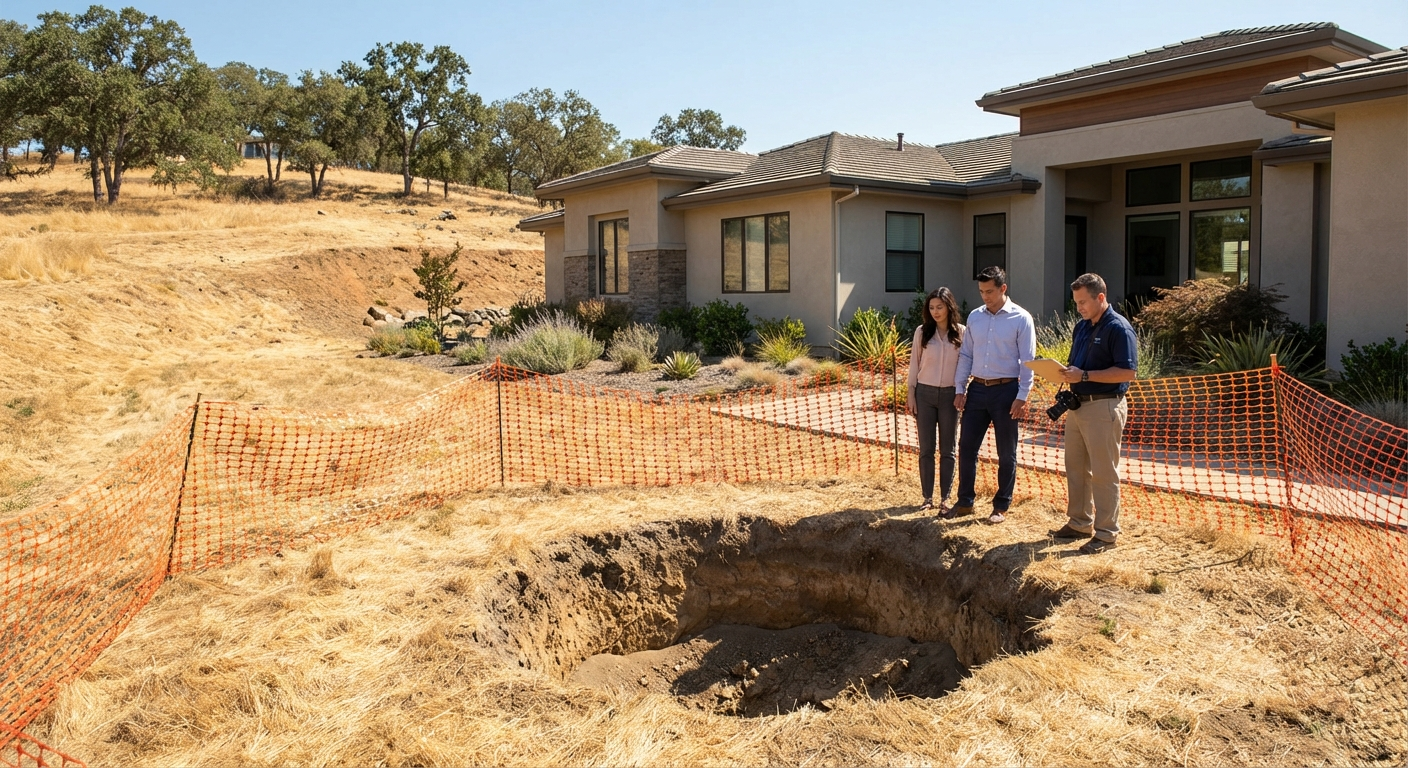
The “Mini-Sinkhole” Problem: Subsidence and Expansive Soils
Many of the ground-related issues we see in California aren’t true geological sinkholes. They’re often related to subsidence or expansive soils.
Think about the clay soils common in places like the Inland Empire or parts of the Central Valley. When these soils get really wet – during a heavy rain season, for example – they expand. When they dry out – during a long, hot summer – they shrink. This constant expansion and contraction can put immense stress on foundations, causing cracks, uneven floors, and even significant structural damage. This movement is called “subsidence” or “heave.”
Guess what? Subsidence is usually covered under that same “earth movement” exclusion. So, if your home’s foundation shifts and cracks due to the natural swelling and shrinking of clay soils, your standard policy likely won’t help you. It’s a frustrating gray area for many homeowners, especially those who’ve seen premiums jump 40% between 2022 and 2024, only to find such common issues aren’t covered.
Is There Specific Sinkhole Coverage for California?
Unlike Florida, where specific sinkhole coverage is often mandatory or readily available as an add-on, it’s much less common in California. Why? Because true, geological sinkholes are rarer here. Insurers design their policies based on actuarial data – the likelihood of an event occurring. Since the pure sinkhole risk is lower, standalone sinkhole coverage isn’t a standard offering.
That said, some insurers *might* offer specific endorsements for “catastrophic ground collapse” or “mine subsidence” in very specific regions. These are extremely rare, and you’d have to ask your agent directly if such an option exists for your property. Don’t expect to find it easily online. It’s definitely not like adding earthquake or flood insurance, which are separate, well-defined policies or endorsements.
For the more common issues of ground movement related to expansive soils or localized erosion from water leaks, you’re usually looking at whether the *cause* of the ground movement is covered. If a pipe burst and eroded the soil causing a collapse, that’s a plumbing issue that led to ground damage, and *that* might be covered. If the soil just naturally shifted over time, it’s almost certainly excluded.
The California FAIR Plan and Ground Movement
You might be thinking, “What about the California FAIR Plan?” For many homeowners struggling to find coverage in high-risk areas – places facing major wildfire threats, for example – the FAIR Plan is a backstop. It provides basic fire insurance when no one else will.
However, the FAIR Plan is very basic. It covers fire, smoke, and sometimes vandalism. It absolutely does *not* cover earth movement, sinkholes, landslides, or any related ground instability. If you’re relying on the FAIR Plan for your primary coverage, you definitely won’t have sinkhole protection.
Finding the Right Help When the Ground Feels Shaky
Understanding what your homeowners policy does and doesn’t cover can feel like trying to decipher an ancient scroll. The language is dense, the exclusions are broad, and the stakes are incredibly high. It’s easy to feel overwhelmed, confused, and even a little scared about what might happen if the ground beneath your home decides to shift.
This is exactly why you need an expert, someone who understands California’s unique geological risks and the specific ins and outs of our insurance policies. Someone who can sit down with you, explain the fine print in plain language, and help you understand your real vulnerabilities.
Karl Susman of Los Angeles Home Protection, CA License #0B75129, has spent years helping California homeowners make sense of these complex issues. He knows the policies, he knows the pitfalls, and he knows how to ask the right questions to uncover potential gaps in your coverage. He can help you understand what your policy *actually* means for sinkholes, subsidence, and other ground movement concerns.
Don’t wait until you see the first crack in your foundation. Get some peace of mind now.
Ready to talk to someone who genuinely understands California home insurance? Find out what your options are.
Get a Home Insurance Quote Today
Frequently Asked Questions About California Sinkhole Coverage
Q: Are true sinkholes common in California?
A: Not as common as in states like Florida, which have extensive soluble bedrock like limestone. California’s geology is different, but we do have areas prone to ground subsidence and erosion from water, which can mimic sinkhole damage.
Q: What’s the difference between a sinkhole and subsidence?
A: A true sinkhole is a sudden collapse into an underground void, often formed by dissolving bedrock. Subsidence is a more general term for the gradual sinking or settling of the ground, often due to soil compaction, groundwater withdrawal, or the shrinking of expansive clay soils during dry periods. Both are typically excluded from standard homeowners policies.
Q: If a burst pipe causes ground collapse, is that covered?
A: Potentially, yes. If the sudden, accidental discharge of water from a plumbing system on your property causes the soil to erode and the ground to collapse, the damage might be covered under the “accidental discharge of water” peril, even if ground movement is generally excluded. This is a key distinction and often depends on the specific wording of your policy and the investigation.
Q: Can I buy a separate sinkhole policy in California?
A: It’s extremely rare. Unlike earthquake or flood insurance, which are separate policies or endorsements, specific standalone sinkhole coverage isn’t commonly offered by California insurers due to the lower actuarial risk of true geological sinkholes compared to other states. Always ask your agent about specific endorsements for ground collapse if you have particular concerns.
Q: What should I do if I see cracks or signs of ground movement around my home?
A: Document everything with photos and dates. Contact a structural engineer to assess the damage and determine the cause. Then, speak with an experienced insurance professional like Karl Susman at Los Angeles Home Protection to understand how your specific policy might respond, given the engineer’s findings.
Understanding your coverage for ground movement is too important to guess at. Connect with an expert who can help you protect your biggest investment.
Talk to an Expert About Your Home Insurance Options
This article is for informational purposes only and does not constitute financial advice.